Summer 2026: 7 Sustainable Fabric Trends Gaining 20% Market Share This Season (RECENT UPDATES)
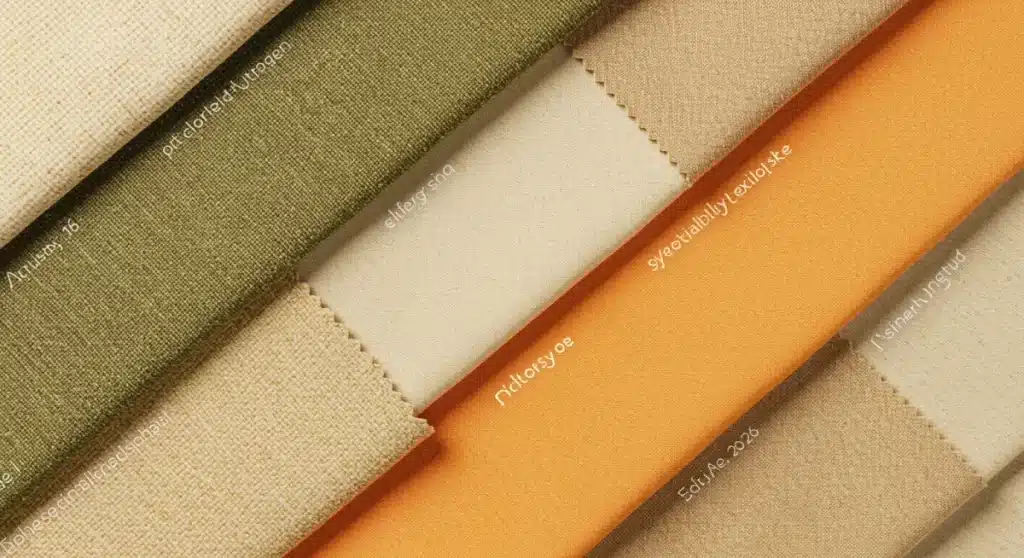
The shift toward a more conscious wardrobe is no longer a niche choice but a global movement. Embracing a Sustainable Fabric is now the cornerstone of Summer 2026, as eco-friendly textiles redefine the boundaries of modern luxury.
Driven by a 20% surge in market share, these earth-conscious materials are transforming global style. From bio-based innovations to recycled weaves, the industry is pivoting toward responsibly sourced, circular alternatives.
Recent updates reveal how green manufacturing is setting new agendas for brands across the United States. Stay ahead by exploring the specific regenerative fibers currently dominating the fashion landscape.
Emergence of Circularity and Bio-Based Innovations
The fashion industry is witnessing a pivotal shift towards circular economy principles, with an increasing emphasis on fabrics derived from renewable resources and those designed for end-of-life recycling.
This movement is not merely a niche interest but a significant market force, driven by both consumer demand and regulatory pressures.
Recent reports indicate that investments in bio-based textile research and development have surged by over 30% in the last year, signaling a strong commitment from manufacturers and brands.
This accelerated innovation is poised to bring a new generation of materials to the forefront, challenging traditional textile production methods.
The projected 20% market share gain for sustainable fabric trends by Summer 2026 underscores a broader industry pivot, moving beyond conventional sustainability efforts to embrace truly regenerative models.
So, this represents a critical juncture for fashion, where ecological responsibility becomes intrinsically linked with commercial success.
Recycled Materials: A Cornerstone of Sustainable Fabric Trends
Recycled materials, particularly polyester and nylon derived from post-consumer waste, continue to dominate the discourse on sustainable fabric trends. Their established infrastructure and versatility make them immediate contenders for substantial market expansion.
Brands are increasingly integrating recycled content into their core collections, moving beyond capsule lines to make it a standard offering.
This shift is a direct response to consumer awareness regarding plastic pollution and the desire for products with a reduced environmental footprint.
The evolution of recycling technologies, including chemical recycling that produces virgin-quality fibers, is further bolstering the appeal and scalability of these materials.
This technological advancement addresses previous limitations and opens new avenues for high-performance sustainable textiles.
Advanced Recycled Polyester and Nylon
The latest advancements in recycled polyester and nylon manufacturing are producing textiles that rival their virgin counterparts in terms of durability, feel, and aesthetic appeal.
This quality improvement is crucial for mainstream adoption, as it removes the perceived trade-off between sustainability and performance.
New partnerships between textile recyclers and major fashion houses are accelerating the supply chain for these materials, making them more accessible and cost-effective.
This collaborative approach is vital for achieving the ambitious market share growth projected for Summer 2026.
- Enhanced durability and performance matching virgin fibers.
- Increased availability through expanded recycling infrastructure.
- Reduced reliance on virgin petrochemical resources.
Hemp and Organic Cotton: Natural Fibers Reimagined
Hemp and organic cotton are experiencing a resurgence, driven by their inherent sustainability benefits and technological improvements in processing.
These natural fibers are positioned to capture significant market share as consumers prioritize natural and eco-friendly options.
Organic cotton production, free from synthetic pesticides and fertilizers, addresses concerns about agricultural impact and soil health. Hemp, known for its minimal water and land requirements, offers an even more resource-efficient alternative.
Innovations in textile finishing and blending are making these fibers softer, more versatile, and suitable for a wider range of apparel, from casual wear to sophisticated fashion pieces. This expanded utility is key to their projected growth in the upcoming seasons.
Innovations in Hemp Processing
New decortication and softening techniques are transforming hemp from a coarse fiber into a luxurious textile, suitable for high-end fashion applications. This development is critical for its widespread acceptance and market penetration.
Blends of hemp with other sustainable fibers, such as organic cotton or Tencel, are creating unique fabrics with enhanced drape, breathability, and comfort.
These hybrid materials offer designers new avenues for creativity while maintaining strong sustainability credentials.
- Softer, more pliable hemp fabrics for diverse applications.
- Blends with other natural fibers for improved aesthetics and performance.
- Strong growth in both casual and high-fashion segments.
Cellulosic Fibers: Tencel, Modal, and Lyocell Leading the Charge
Regenerated cellulosic fibers, including Tencel, Modal, and Lyocell, derived from wood pulp, are at the forefront of sustainable fabric trends due to their closed-loop production processes and luxurious feel.
These fibers offer an environmentally responsible alternative to conventional rayon.
Their production typically involves sustainably managed forests and innovative solvent systems that minimize chemical waste and water usage.
This commitment to responsible sourcing and manufacturing resonates strongly with eco-conscious consumers.
The versatility of cellulosic fibers allows them to mimic silk, cotton, or even wool, making them highly adaptable for various textile applications, from activewear to formal garments.
This broad appeal positions them for substantial growth by Summer 2026.
Innovative Bio-Based and Lab-Grown Materials
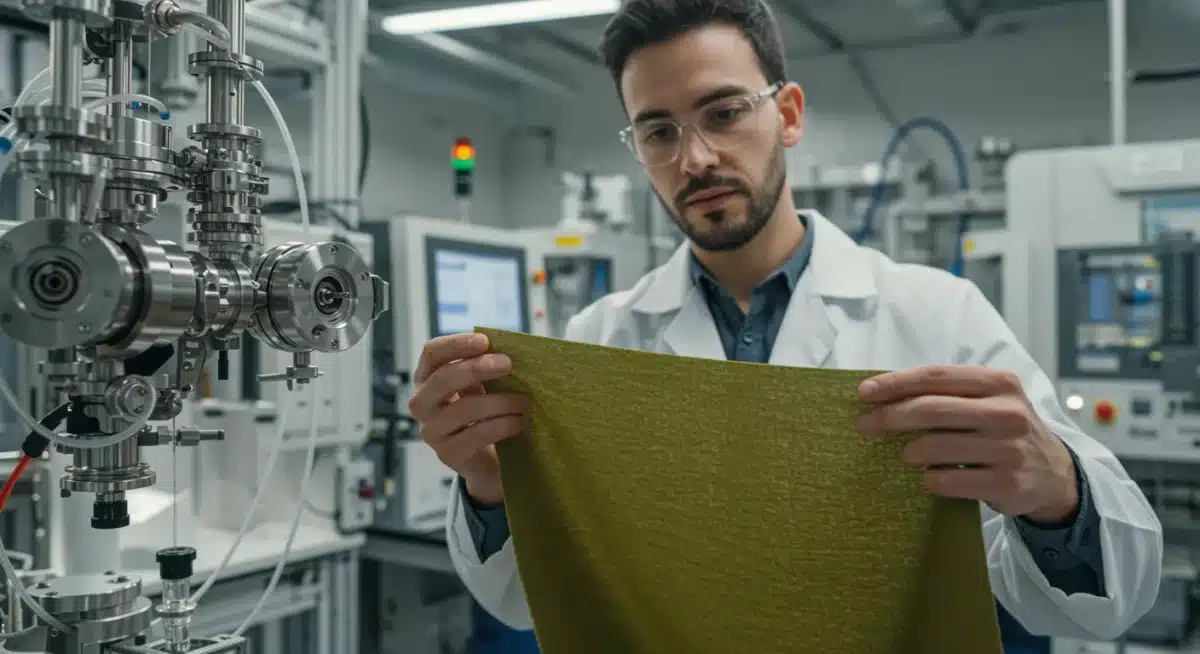
The frontier of sustainable fabric trends is being pushed by innovative bio-based and lab-grown materials, which are beginning to move from experimental stages to commercial viability.
These materials offer radical solutions to textile sustainability challenges.
Examples include fabrics made from agricultural waste, algae, mushroom mycelium, and even spider silk proteins produced through fermentation. These novel materials address both resource depletion and pollution concerns associated with traditional textiles.
While still emerging, these innovations are attracting significant investment and research, indicating their potential to disrupt the market in the medium to long term.
Their eventual integration into mainstream fashion will be a key indicator of the industry’s commitment to radical sustainability.
Mycelium-Based Leathers and Silks
Mycelium-based materials, offering a vegan and biodegradable alternative to traditional leather, are gaining traction with luxury brands. These materials replicate the look and feel of animal leather with a significantly lower environmental impact.
Similarly, lab-grown silks, produced through fermentation without silkworms, are addressing ethical and environmental concerns associated with conventional silk production. These innovations represent a paradigm shift in material sourcing.
Innovation takes center stage with mycelium providing high-performance, animal-free leather alternatives that satisfy both aesthetic and ethical demands.
Simultaneously, lab-grown silks are emerging as a premier eco-friendly luxury choice, eliminating traditional environmental footprints without sacrificing texture.
Supporting this shift, significant capital is now flowing into scaling these production methods to ensure these green solutions achieve broad market availability.
Dyeing Innovations: Reducing Water and Chemical Footprints
Beyond the fibers themselves, sustainable dyeing processes are a critical component of sustainable fabric trends, aiming to drastically reduce water consumption and chemical pollution.
New technologies are transforming this historically resource-intensive stage of textile production.
Waterless dyeing techniques, such as supercritical CO2 dyeing, and the use of natural or low-impact dyes are gaining prominence. These methods offer significant environmental benefits without compromising color vibrancy or fastness.
The adoption of these innovative dyeing solutions is becoming a non-negotiable for brands committed to comprehensive sustainability. By Summer 2026, these practices are expected to be much more widespread across the industry.
Traceability and Transparency: The New Consumer Expectation
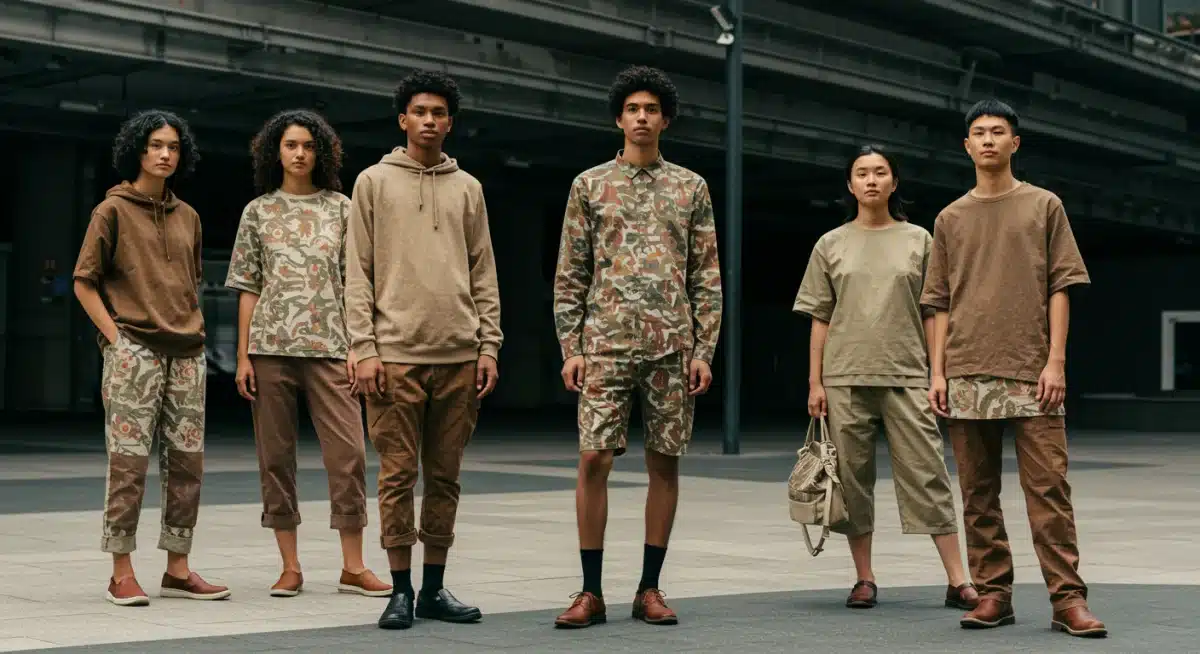
Consumers are increasingly demanding full traceability and transparency in their fashion purchases, compelling brands to provide detailed information about their supply chains and material origins.
This trend is inextricably linked to the growth of sustainable fabric trends.
Blockchain technology and other digital platforms are being deployed to track fibers from source to finished garment, ensuring authenticity and verifying sustainability claims.
This level of transparency builds trust and empowers consumers to make informed choices.
Brands that can confidently communicate their sustainability efforts, backed by verifiable data, will gain a competitive edge. This shift is transforming how fashion businesses operate and interact with their customer base.
Policy and Regulatory Landscape Driving Adoption
The increasing focus on environmental policy and regulatory frameworks is playing a significant role in accelerating the adoption of sustainable fabric trends. Governments globally are introducing legislation that incentivizes eco-friendly practices and penalizes unsustainable ones.
Extended Producer Responsibility (EPR) schemes, carbon taxes, and stricter chemical regulations are pushing manufacturers to invest in sustainable materials and processes. These policies create a more level playing field for sustainable innovations.
The anticipated regulatory shifts by 2026 will further cement the business case for sustainability, making it not just an ethical choice but an economic imperative for the fashion industry. This external pressure is a powerful catalyst for change.
| Key Trend | Brief Description |
|---|---|
| Recycled Materials | Polyester and nylon from post-consumer waste, with advanced recycling methods. |
| Natural Fibers | Hemp and organic cotton, enhanced by new processing techniques for comfort. |
| Cellulosic Fibers | Tencel, Modal, Lyocell from wood pulp, using closed-loop production. |
| Bio-Based Innovations | Materials from agricultural waste, algae, mycelium, and lab-grown alternatives. |
Frequently Asked Questions About Sustainable Fabric Trends
A sustainable fabric trend for Summer 2026 is characterized by materials that minimize environmental impact throughout their lifecycle, from sourcing raw materials to disposal. This includes fabrics made from recycled content, organic natural fibers, bio-based innovations, and those produced with reduced water and chemical usage.
These trends are gaining market share due to increasing consumer demand for eco-friendly products, advancements in textile technology making sustainable options more viable, and growing regulatory pressures on the fashion industry to adopt greener practices. Brands are responding by integrating these materials into their mainstream collections.
Bio-based materials contribute to sustainability by utilizing renewable resources, often derived from agricultural waste or natural organisms like algae and fungi. They reduce reliance on fossil fuels, can be biodegradable, and often require less water and energy in their production compared to conventional synthetic fibers, offering a circular solution.
Technology is crucial in advancing sustainable fabric trends, enabling innovations like chemical recycling for higher-quality recycled fibers, new processing methods for natural fibers like hemp, and the development of entirely new bio-based and lab-grown materials. It also improves dyeing processes, reducing environmental footprints, and enhances supply chain transparency through tools like blockchain.
For the average consumer, these sustainable fabric trends mean more choices for eco-friendly clothing that doesn’t compromise on style or quality. They will see an increased availability of garments made from recycled, organic, and innovative bio-based materials, often accompanied by greater transparency about their origin and environmental impact, fostering more conscious purchasing decisions.
Looking Ahead: The Future of Sustainable Fashion
The rapid ascent of sustainable fabric trends, projected to capture a 20% market share by Summer 2026, signals a profound and irreversible transformation within the fashion industry.
This is not merely a passing fad but a foundational shift driven by technological innovation, evolving consumer values, and increasingly stringent environmental regulations.
Brands that embrace these changes, investing in research, ethical sourcing, and transparent supply chains, are poised for long-term success.
The future of fashion is undeniably green, and staying informed on these developments is paramount for both industry stakeholders and environmentally conscious consumers navigating the evolving landscape.
