Conscious Consumer’s Checklist: 4 Questions for Apparel in 2026
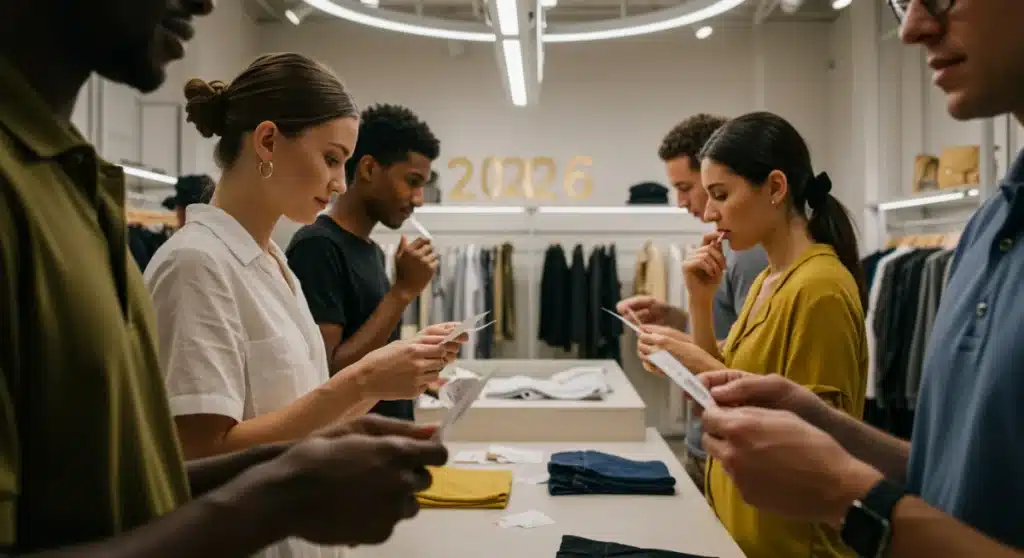
The conscious consumer’s checklist for 2026 simplifies ethical apparel choices by focusing on four essential questions that guide purchases towards sustainability and responsible practices.
As we navigate the evolving landscape of fashion, the concept of mindful purchasing has never been more critical. The conscious consumer’s checklist: 4 essential questions to ask before every apparel purchase in 2026 is your indispensable guide to making choices that align with your values and contribute to a more sustainable future.
Understanding the Rise of Conscious Consumption in Fashion
The fashion industry is undergoing a profound transformation, driven by a growing awareness among consumers about the environmental and social impact of their clothing choices. This shift isn’t just a trend; it’s a fundamental change in how we perceive and interact with apparel. Consumers in 2026 are increasingly seeking transparency, ethical production, and sustainable materials.
This evolving mindset is pushing brands to re-evaluate their supply chains, manufacturing processes, and overall business models. From fast fashion’s rapid cycles to the rise of circular economy initiatives, the landscape is becoming more complex, yet also more promising for those committed to responsible consumption. Understanding these dynamics is the first step toward becoming a truly conscious consumer.
The Environmental Imperative
The environmental footprint of fashion is undeniable, from water usage and chemical pollution to textile waste. Consumers are now demanding to know the true cost of their clothing beyond the price tag.
- Water Consumption: Textile production, especially for cotton, requires vast amounts of water, contributing to water scarcity in many regions.
- Chemical Pollution: Dyes and finishing processes often release harmful chemicals into waterways, impacting ecosystems and human health.
- Microplastic Release: Synthetic fabrics shed microplastics during washing, polluting oceans and entering the food chain.
- Waste Generation: The sheer volume of discarded clothing overwhelms landfills, with a significant portion being non-biodegradable.
Addressing these issues requires a systemic shift, but individual purchasing decisions play a crucial role in signaling demand for sustainable alternatives. Every choice we make contributes to the collective pressure on the industry to innovate and improve.
Social Responsibility and Ethical Production
Beyond environmental concerns, the human element of fashion production is equally vital. Labor practices, fair wages, and safe working conditions are paramount to ethical consumption.
Many consumers are now actively researching brands to understand their commitment to human rights throughout their supply chains. This includes everything from the sourcing of raw materials to the garment factories where clothes are assembled. The demand for fair trade certifications and transparent labor policies is at an all-time high, reflecting a deeper moral consideration in shopping habits.
The rise of conscious consumption in fashion is a powerful indicator of changing societal values. It underscores a collective desire for a future where style and sustainability are not mutually exclusive, but rather intrinsically linked. By embracing this movement, consumers can drive meaningful change within the industry.
Question 1: What is this garment made of and where do its materials come from?
The first and arguably most foundational question for any conscious consumer in 2026 revolves around the composition and origin of a garment’s materials. The choices made at this stage have ripple effects across the entire lifecycle of the product, impacting everything from environmental sustainability to social responsibility.
Understanding the fabric’s properties, how it was grown or manufactured, and its journey from raw material to finished textile provides invaluable insight. This goes beyond simply checking the care label; it involves delving into the brand’s transparency regarding its sourcing practices. Consumers are empowered to seek out information about the ecological footprint of different fibers and the ethical implications of their production.
Sustainable Fiber Innovations
The textile industry is rapidly innovating, offering a growing array of sustainable alternatives to conventional materials. These innovations are key to reducing environmental impact.
- Organic Cotton: Grown without synthetic pesticides and fertilizers, significantly reducing chemical runoff and water pollution.
- Recycled Polyester: Made from post-consumer plastic bottles or textile waste, diverting waste from landfills and reducing reliance on virgin fossil fuels.
- Tencel Lyocell/Modal: Derived from sustainably managed wood sources, using a closed-loop process that recovers and reuses solvents.
- Hemp and Linen: Natural fibers requiring less water and pesticides than conventional cotton, offering durability and breathability.
Beyond these, emerging materials like mushroom leather, pineapple leaf fibers, and lab-grown silk are pushing the boundaries of what’s possible, offering even more eco-friendly options. Staying informed about these advancements allows consumers to make forward-thinking choices.
The Importance of Supply Chain Transparency
Knowing where materials originate is crucial for assessing both environmental and social impacts. A transparent supply chain allows consumers to verify claims of sustainability and ethical production.
Brands that openly share information about their suppliers, from farms to mills, demonstrate a commitment to accountability. This transparency helps to combat issues like forced labor, unfair wages, and unsustainable resource extraction. Consumers should look for certifications (like GOTS for organic textiles or Fair Trade) and brands that provide detailed stories about their material journey.
Ultimately, by asking about materials and their origins, the conscious consumer gains a deeper appreciation for the garment and ensures their purchase supports practices that benefit both people and the planet. It’s about moving beyond superficial aesthetics to understand the true story behind what we wear.
Question 2: How was this garment produced and under what labor conditions?
Delving into the production process of a garment is the second critical question for the conscious consumer in 2026. This inquiry extends beyond the factory floor, encompassing the entire manufacturing journey, from dyeing and cutting to stitching and finishing. Understanding these steps and, crucially, the labor conditions under which they occur, is fundamental to ethical consumption.
The journey of a piece of clothing is complex, often involving multiple stages and countries. Each step presents opportunities for either responsible practices or exploitation. By investigating how a garment was made, consumers can support brands committed to fair labor and environmentally sound production methods, thereby rejecting practices that harm workers or the environment.
Ethical Manufacturing Practices
Ethical manufacturing goes hand-in-hand with sustainable production, ensuring that human rights and environmental standards are upheld throughout the process.
- Fair Wages: Workers should receive a living wage that covers their basic needs and allows for a decent quality of life.
- Safe Working Conditions: Factories must provide a safe and healthy environment, free from hazards and abuse.
- No Forced or Child Labor: Adherence to international labor laws prohibiting these exploitative practices is non-negotiable.
- Freedom of Association: Workers should have the right to form unions and collectively bargain for their rights.
Brands demonstrating these commitments often participate in third-party audits and certifications, providing an extra layer of assurance for consumers. Looking for these indicators can simplify the complex task of vetting a brand’s ethical standing.
Environmental Impact of Production Processes
Beyond labor, the methods used in production also carry significant environmental weight. From water usage in dyeing to energy consumption in factories, every step has an ecological footprint.
Conscious consumers should seek out brands that employ closed-loop systems, minimize waste, use renewable energy, and treat wastewater effectively. Innovations in dyeing techniques, such as waterless dyeing or natural dyes, also play a vital role in reducing the environmental impact of apparel production. Understanding these details helps in making choices that support ecological preservation.
By asking about production methods and labor conditions, consumers contribute to a demand for greater accountability and transparency within the fashion industry. This pressure encourages brands to adopt more responsible practices, ultimately leading to a more ethical and sustainable global supply chain.
Question 3: What is the true cost and expected lifespan of this item?
The third essential question for the conscious consumer in 2026 challenges the conventional notion of price. It prompts a deeper consideration of a garment’s true cost, moving beyond the cash register price to encompass its environmental, social, and personal value over time. Coupled with this is an honest assessment of the item’s expected lifespan and durability.
Fast fashion has conditioned many to prioritize low prices and fleeting trends, often at the expense of quality and longevity. However, a conscious approach encourages an investment mindset. By evaluating the true cost and anticipated lifespan, consumers can make more economical and sustainable choices in the long run, reducing waste and fostering a more meaningful relationship with their wardrobe.
Beyond the Price Tag: Calculating True Cost
The true cost of a garment includes not just its monetary value, but also the environmental and social externalities involved in its creation. This holistic view helps in making informed decisions.
- Cost Per Wear: A high-quality item, though initially more expensive, often has a lower cost per wear due to its durability and longevity.
- Environmental Cost: Consider the resources (water, energy) and pollution generated during production.
- Social Cost: Reflect on whether workers were paid fair wages and worked in safe conditions.
- Emotional Cost: Does the item bring joy and align with your values, or is it a fleeting purchase driven by impulse?
By factoring in these elements, consumers can appreciate the value of well-made, ethically produced clothing. This perspective shifts buying habits from quantity to quality, promoting a more mindful approach to fashion.
Assessing Durability and Longevity
A key aspect of sustainability is how long an item remains wearable and desirable. High-quality construction and classic design contribute significantly to longevity.
Before purchasing, examine the garment’s construction: are seams reinforced? Is the fabric durable and resistant to wear and tear? Consider the timelessness of its style; will it remain relevant beyond a single season? Investing in pieces that can be worn for years, or even decades, drastically reduces the need for frequent replacements, thereby minimizing textile waste.
The conscious consumer recognizes that a cheap, poorly made item is often more expensive in the long run due to its short lifespan and the cumulative environmental impact of frequent replacements. Prioritizing durability and a realistic lifespan is a powerful act of resistance against the disposable nature of modern fashion.
Question 4: Do I genuinely need this item, and how will it integrate into my existing wardrobe?
The final, perhaps most introspective, question for the conscious consumer in 2026 centers on personal necessity and wardrobe integration. This inquiry moves beyond the ethical and environmental considerations to a deeply personal assessment: Is this purchase truly needed, and will it serve a functional and aesthetic purpose within my current collection of clothes?
This question is designed to combat impulse buying and the accumulation of unworn items, which contribute significantly to textile waste. By thoughtfully considering how a new piece will fit into an existing wardrobe, consumers can cultivate a more cohesive, functional, and sustainable personal style, reducing unnecessary consumption and extending the life of their entire collection.
Mindful Consumption vs. Impulse Buying
Distinguishing between genuine need and fleeting desire is a cornerstone of mindful consumption. This involves a pause before purchase to reflect on underlying motivations.
- Identify Gaps: Does this item fill a genuine gap in your wardrobe, or is it a duplication of something you already own?
- Versatility: Can this piece be styled in multiple ways and for various occasions, maximizing its utility?
- Long-Term Appeal: Will you still love and wear this item in a year, or is it a response to a passing trend?
- Emotional Connection: Does this item truly resonate with your personal style and make you feel confident and comfortable?
Practicing mindfulness in purchasing helps to create a wardrobe that is not only sustainable but also deeply personal and reflective of individual style, rather than external pressures.
Integrating New Pieces Thoughtfully
A new garment should enhance, not complicate, your existing wardrobe. Thoughtful integration ensures that every piece earns its place.
Consider how a potential purchase will complement colors, styles, and silhouettes you already own. Can it be mixed and matched with at least three other items? Does it align with your lifestyle and the activities you regularly engage in? A well-integrated wardrobe functions like a capsule collection, where every item works harmoniously with others, reducing the need for constant new additions.
By asking these questions about need and integration, the conscious consumer fosters a more intentional approach to personal style. This leads to a wardrobe that is not only more sustainable but also more reflective of who they are, promoting longevity and reducing the environmental burden of unworn clothing.
Embracing a Circular Fashion Mindset
Beyond the initial purchase, the conscious consumer in 2026 is increasingly adopting a circular fashion mindset. This approach considers the entire lifecycle of a garment, from its creation to its eventual end-of-life, and seeks to keep materials in use for as long as possible. It’s a shift from the linear ‘take-make-dispose’ model to one that prioritizes resource efficiency and waste reduction.
A circular mindset encourages consumers to think about repair, reuse, and recycling, extending the life of their clothing and minimizing their environmental footprint. This involves actively seeking out brands that offer repair services, participating in clothing swaps, or properly recycling textiles when they can no longer be worn. It’s about taking responsibility for our garments even after we’ve finished wearing them.
Repair, Reuse, and Repurpose
Extending the life of clothing through repair, reuse, and repurposing is a powerful way to reduce waste and embrace circularity. It challenges the throwaway culture of fast fashion.
- Repair: Learning basic mending skills or utilizing professional repair services can significantly extend a garment’s lifespan.
- Reuse: Donating clothes, participating in textile swaps, or selling pre-owned items gives them a second life.
- Repurpose: Transforming old clothes into new items, like cleaning rags, tote bags, or craft materials, prevents them from going to landfill.
These practices not only reduce environmental impact but also foster creativity and a deeper connection with our clothing. It’s a tangible way to act on conscious consumer values.
Recycling and Responsible Disposal
When a garment truly reaches the end of its wearable life, responsible disposal through recycling is the next crucial step. This ensures that valuable materials can be recovered and repurposed.
Many brands now offer take-back programs for old clothing, and specialized textile recycling facilities are becoming more accessible. Understanding local recycling options and the types of fabrics that can be recycled is essential. Avoiding the landfill for textiles completes the circular journey, allowing materials to be re-entered into the production cycle, thus reducing the demand for new virgin resources.
Embracing a circular fashion mindset is a holistic approach that empowers consumers to make responsible decisions at every stage of a garment’s life. It transforms individual actions into a collective force for a more sustainable and equitable fashion industry.
The Future of Fashion: Empowering Consumer Choices
Looking ahead to 2026 and beyond, the future of fashion is undeniably shaped by empowered consumer choices. The shift towards conscious consumption is not a fleeting trend but a fundamental reorientation of values within the industry. Consumers are no longer passive recipients of trends; they are active participants, demanding transparency, ethics, and sustainability from the brands they support.
This dynamic interplay between consumer demand and industry response is creating a more accountable and innovative fashion landscape. Brands that fail to adapt to these evolving expectations risk losing relevance, while those that embrace conscious principles are poised to thrive. Ultimately, the power lies in the hands of the individual shopper to drive meaningful and lasting change.
The role of technology will become even more pronounced in facilitating conscious choices. From blockchain technology providing verifiable supply chain data to AI-powered apps recommending sustainable alternatives, information will be more accessible than ever. This technological integration will empower consumers with the tools needed to make truly informed decisions, transforming the act of shopping into an act of advocacy.
Moreover, educational initiatives will continue to grow, demystifying complex topics like textile science and ethical labor practices. As consumers become more knowledgeable, their ability to discern genuine sustainability from greenwashing will sharpen, further pushing brands towards authentic and verifiable claims. This collective rise in awareness is critical for the continued evolution of the fashion industry.
The journey towards a fully sustainable and ethical fashion world is ongoing, but the momentum is undeniable. By consistently applying the conscious consumer’s checklist and staying informed, individuals can play a pivotal role in shaping a future where fashion is not only beautiful but also responsible, respectful, and regenerative. Every purchase becomes a statement, a vote for the kind of industry we wish to support and perpetuate.
| Key Question | Why It Matters |
|---|---|
| Material Origin? | Impacts environmental footprint and ethical sourcing. |
| Production & Labor? | Ensures fair wages and safe working conditions. |
| True Cost & Lifespan? | Reduces waste and promotes long-term value. |
| Genuine Need? | Prevents impulse buying and builds a cohesive wardrobe. |
Frequently Asked Questions About Conscious Apparel
The primary benefit is contributing to a more sustainable and ethical fashion industry. By making informed choices, you reduce environmental harm, support fair labor practices, and cultivate a more mindful relationship with your clothing, ultimately creating a positive impact on both people and the planet.
Look for certifications like GOTS (Global Organic Textile Standard) for organic cotton, or materials like recycled polyester, Tencel, hemp, and linen. Brands committed to sustainability often highlight these materials on their labels or websites, providing transparent information about their ecological footprint and sourcing.
‘True cost’ refers to the comprehensive value of a garment, extending beyond its retail price. It includes environmental impacts (resources, pollution), social impacts (labor conditions, wages), and its long-term utility to you (cost per wear, durability). It encourages valuing quality and ethics over cheap, disposable items.
Before buying, ask yourself if you genuinely need the item and how it integrates with your current wardrobe. Consider if it fills a gap, is versatile, and aligns with your long-term style. Waiting 24-48 hours before purchasing can also help differentiate between true need and fleeting desire, promoting mindful decisions.
Circular fashion aims to keep materials in use for as long as possible, reducing waste and reliance on new resources. For conscious consumers, this means prioritizing repair, reuse, and recycling of garments. It’s about extending the life of clothing through donations, swaps, or proper textile recycling, fostering a more sustainable lifecycle.
Conclusion
The journey to becoming a truly conscious consumer in the apparel industry by 2026 is an ongoing process of learning and intentional decision-making. By consistently applying the four essential questions outlined in this checklist—concerning materials, production, true cost, and genuine need—you empower yourself to make choices that resonate with your values. This mindful approach not only enriches your personal style but also contributes significantly to a more ethical and sustainable future for fashion globally.
